If you have recently picked up a variable wattage device and found yourself staring at the screen, wondering what number to punch in, you are not alone. Wattage is one of the most common things new vapers get confused about, and it is also one of the most important settings to get right. Too low and your vape will taste weak and unsatisfying. Too high and you risk a horrible burnt hit that ruins your coil and puts you off for the rest of the day.
The good news is that once you understand how wattage works and what your specific coil needs, finding the right setting becomes very straightforward. This guide will walk you through everything you need to know, from what wattage actually means to specific recommendations for the most common coil types used by UK vapers today.
What Does Wattage Mean in Vaping?
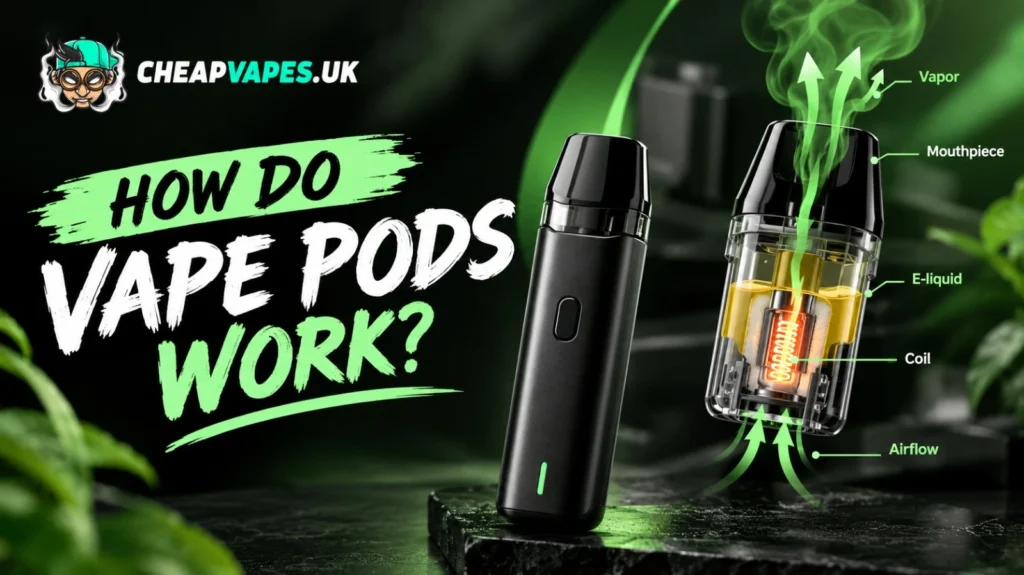
Wattage refers to the amount of electrical power your vape device sends to the coil. The coil is the small heating element inside your tank or pod that heats up your e-liquid and turns it into vapour. When you increase the wattage, more power flows to the coil, it heats up faster and hotter, and you get a bigger, warmer cloud of vapour.
Lower wattage means the coil heats more gently, producing a cooler, smaller draw. This is not necessarily worse; it depends entirely on the coil resistance you are using, the type of e-liquid in your tank, and your personal preference for how your vape feels.
Understanding this relationship between power, coil resistance, and vaping style is the foundation for choosing the right wattage for vaping every single time.
Why Getting the Right Wattage Matters
Using the wrong wattage is the leading cause of two of the most unpleasant vaping experiences: dry hits and overly harsh throat hits.
A dry hit happens when the coil gets too hot before the cotton wick has had a chance to absorb enough e-liquid. The result is a scorched, acrid taste that can linger for hours. Running your device at too high a wattage is one of the fastest ways to cause this, as is chain vaping without giving the wick time to re-saturate.
On the other end, vaping at too low a wattage can lead to a muted flavour, reduced vapour production, and in some cases, a gurgling or flooded coil as the liquid does not vaporise fast enough.
Getting the ideal wattage for vaping means better flavour, smoother hits, and coils that last much longer.
Ideal Wattage Ranges for Different Coil Types
The single most important factor when choosing your wattage is the resistance of your coil, measured in ohms (Ω). Coils with higher resistance (above 1.0Ω) are designed for lower wattage. Coils with lower resistance (below 1.0Ω, known as sub-ohm coils) need more power to perform properly.
Most modern vape kits sold in the UK come with replacement coils that have the recommended wattage range printed directly on the side of the coil. Always check this first. The guidance below is based on the most common coil types you will encounter.
Best Wattage for a 1.0 Ohm Coil
A 1.0 ohm coil is a higher resistance coil, most commonly found in mouth-to-lung (MTL) devices. MTL vaping mimics the draw of a traditional cigarette, making these coils popular with people who have recently switched from smoking.
The recommended wattage for a 1.0 ohm coil typically falls between 10W and 15W. Some vapers prefer to sit towards the lower end of this range for a cooler, tighter draw, while others nudge it slightly higher for a warmer hit. Start at around 10W and work your way up in small increments until the flavour feels right to you.
Best Wattage for a 0.8 Ohm Coil
The 0.8 ohm coil sits in a sweet spot between MTL and restricted direct-to-lung vaping and is used in many refillable pod kits and pre-filled pods. It is one of the most popular coil types in the UK right now, used in many refillable pod kits and pen-style devices.
The best wattage for a 0.8 ohm coil is generally between 12W and 25W. This range gives you a satisfying amount of vapour and flavour without pushing the coil too hard. Again, start lower and increase gradually. Many vapers find 15W to 20W hits the sweet spot for this resistance.
Best Wattage for a 0.6 Ohm Coil
A 0.6 ohm coil is a proper sub-ohm coil, designed for a more direct, airier draw with larger clouds. These coils are used in sub-ohm tanks and more advanced pod systems.
The best wattage for a 0.6 ohm coil typically ranges from 20W to 40W. Lower sub-ohm coils like this need more power to heat the larger coil surface area efficiently. Starting around 25W and adjusting from there is a sensible approach.
Quick Wattage Guide Table
| Coil Resistance | Vaping Style | Recommended Wattage |
| 1.0Ω and above | Mouth-to-Lung (MTL) | 10W to 15W |
| 0.8Ω | MTL / Restricted DTL | 12W to 25W |
| 0.6Ω | Sub-Ohm / DTL | 20W to 40W |
| 0.4Ω and below | Direct-to-Lung (DTL) | 40W to 80W+ |
Always refer to the wattage range printed on your specific coil, as these figures can vary between manufacturers.
Wattage for Freebase Nicotine vs Nic Salts
Your e-liquid type also plays a role in choosing the right wattage. Here is how the two most common liquid types behave at different power levels.
Best Wattage for Freebase Nicotine
Freebase nicotine e-liquids, which include standard 50/50 blends and high-VG shortfills, can generally handle a broader range of wattages. They are well suited to both MTL and sub-ohm setups. At lower wattages (10W to 20W), freebase delivers a clean, focused flavour. At higher wattages (25W and above) with sub-ohm coils, you get bigger cloud production and a warmer vape experience.
Best Wattage for Nic Salts
Nic salt e-liquids are specifically designed for lower wattage devices. Because nic salts deliver nicotine more efficiently into the bloodstream, they are best used at wattages between 8W and 20W, paired with higher-resistance coils (0.8Ω to 1.2Ω). Vaping nic salts at high wattages on a sub-ohm coil will deliver an extremely harsh throat hit and could become unpleasant very quickly.
If you are using a pre-filled pod kit or a simple pen device, chances are it is already set up perfectly for nic salts at its default wattage. Many of these devices are not variable at all, taking the guesswork out of the equation entirely.
Low Wattage vs High Wattage Vaping
Understanding the core difference between low and high wattage vaping helps you match your device and liquid to your personal preference.
Low wattage vaping (roughly 8W to 20W):
- Cooler, tighter draw similar to a cigarette
- Better suited to nic salts and higher-resistance coils
- Ideal for beginners and those switching from smoking
- Less vapour produced, which is more discreet
- Coils tend to last longer
High wattage vaping (roughly 30W and above):
- Warmer, airier draw with larger clouds
- Best suited to sub-ohm coils and high-VG freebase liquids
- More popular with experienced vapers chasing flavour and cloud production
- Consumes e-liquid faster
- Requires more battery power
Neither approach is objectively better. It really comes down to what kind of vaping experience you enjoy.
How to Adjust Wattage on Your Vape: A Step-by-Step Guide
If your device has a wattage adjustment feature, here is how to use it safely.
- Check your coil. Before anything else, look at the side of your coil for the recommended wattage range. This is your starting point.
- Install the coil and prime it. Drop a few drops of e-liquid directly onto the cotton wick holes before fitting the coil, then fill your tank and leave it to sit for five to ten minutes.
- Set the wattage to the lower end of the recommended range. If your coil says 15W to 30W, start at 15W.
- Take a short test puff. You are checking for flavour, warmth, and throat feel. A good hit should taste clean and produce a satisfying amount of vapour.
- Increase gradually. If the vape feels weak or muted, increase the wattage by 2W to 3W at a time.
- Find your sweet spot. Once you find a wattage that feels satisfying without being harsh or hot, stick with it.
- Avoid chain vaping. Regardless of wattage, give your wick a few seconds between puffs to re-saturate and avoid dry hits.
Tips on How to Prevent Dry Hits
Dry hits are avoidable with a little care. Here are the most effective ways to keep your coil happy.
- Always prime a new coil. Never fire a brand-new coil dry. Add liquid to the wick holes and wait before your first puff.
- Do not vape above the recommended wattage. Staying within the range printed on the coil is the single best prevention.
- Keep your tank topped up. Running the tank too low means the wick struggles to stay saturated.
- Pace your puffing. Taking rapid, back-to-back puffs depletes the wick faster than it can absorb more liquid.
- Use the right liquid for your coil. Thick, high-VG liquids may not wick fast enough in certain coils designed for thinner 50/50 blends.
Finding the Best Wattage for Your Vape Device
If you are shopping for a new kit and want to make choosing your wattage as simple as possible, look for devices that display the recommended wattage range automatically when you install a coil. Many modern kits do this as standard.
At Cheap Vapes UK, you will find a wide range of vape kits and pod systems to suit every wattage preference and experience level, whether you are after a compact pod kit for nic salts at low wattage or a full sub-ohm setup for bigger cloud production.
Final Thoughts
So, what wattage should you vape at? The short answer is: whatever is recommended for your specific coil. Start at the lower end of the stated range, take a few puffs, and adjust upward until the flavour and feel suits you. Pay attention to whether you are using nic salts or freebase nicotine, and choose a coil resistance that matches your preferred draw style.
Getting your wattage right makes a bigger difference to your vaping experience than most people realise. A correctly powered coil produces better flavour, lasts longer, and gives you a much more consistent vape from the first puff to the last. Take a few minutes to dial it in properly and you will not look back.